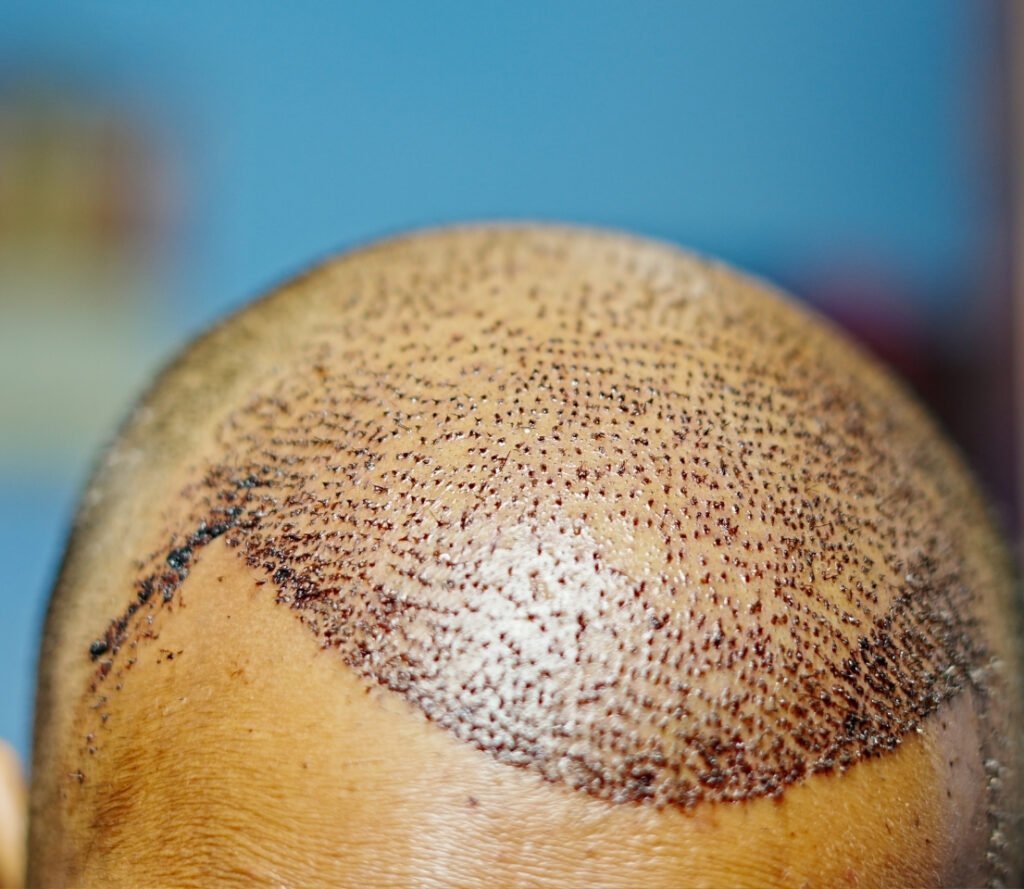
DHI (Direct Hair Implantation) is one of the most advanced hair transplant techniques available today. In this method, grafts are implanted directly into the scalp using Choi implanter pens without the need for a separate channel-opening step. This enables more precise angle control and denser transplantation.
What Is DHI Hair Transplant?
In the DHI method:
- Grafts are loaded into special Choi implanter pens
- Channel opening and graft placement are performed simultaneously with the pen
- A separate pen tip is used for each graft
- Grafts spend minimal time outside the tissue
Advantages of DHI
Maximum Graft Survival
Because grafts spend very little time outside the tissue, the survival rate is maximized.
Unshaven Application
DHI is the most suitable method for unshaven hair transplant. It is especially preferred for women and small areas.
Precise Angle Control
The hair growth angle and direction are fully controlled for each graft.
Minimal Bleeding
The sharp tips of Choi pens cause minimal tissue trauma.
Fast Healing
Less tissue damage leads to a faster recovery process.
DHI vs FUE Comparison
| Feature | FUE | DHI |
|---|---|---|
| Channel Opening | Separate step | Simultaneous |
| Unshaven Application | Difficult | Ideal |
| Max. Grafts/Session | 5000+ | 3000-3500 |
| Between Existing Hair | Requires careful work | Ideal |
Who Is DHI Suitable For?
- Those who want an unshaven hair transplant
- Women experiencing hair thinning
- Densification between existing hair
- Hairline and temple area corrections
- Small and medium-sized areas
- Eyebrow, beard, and moustache transplant
DHI Procedure Steps
- Graft Extraction: Follicles are extracted one by one using the FUE method
- Graft Loading: Each graft is loaded into a Choi pen
- Implantation: Simultaneous channel opening and placement with the pen
- Completion: All grafts are implanted
DHI at Estetistanbul
At Estetistanbul Medical Centre, DHI is performed using original Choi implanter pens with single-use tips. Our experienced team determines the most suitable method for each patient.